|
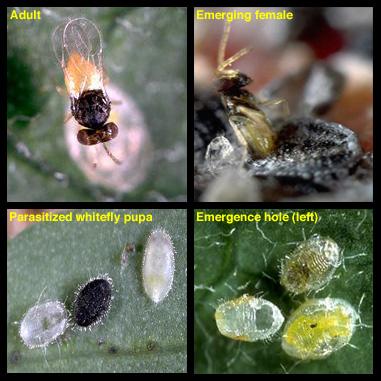
Encarsia formosa Wasp
Encarsia formosa Life Cycle - University of California
View more pictures: Bing Images Google Images Yahoo Images Common names: Encarsia, Encarsia Wasp Scientific name: Encarsia-formosa Region: Throughout North America and England Life cycle: Many broods per year. Twenty days per Life cycle. Temperatures above 70 degrees is most desirable. Physical Description: The adult parasite is about 1/40 of inch long all are females (except 1 in a 1000), and reproduce without mating. Feeding characteristics: The female of this beneficial wasp searches for Greenhouse Whitefly nymphs and pupae on foliage, and lays its eggs in each. The eggs hatch inside the insect causing the host to turn black. The adult emerges by cutting a hole in the host. Encarsia is 80% to 90% effective, which considering this insect, needs the Whitefly to survive. You can ensure a good population of Encarsia in your garden the following year by helping them overwinter. Late in the season, collect the leaves of Tomato plants that contain pupae of both the pest and Encarsia. (If you have had Greenhouse Whiteflies on your Tomato plants, you can be certain that there may be Encarsia pupae as well.) Place the leaves next to a potted Rose Geranium in a Greenhouse or sheltered spot. In the spring set the Rose Geranium and leaves out in the garden to release the wasps.
|