Growing Garlic
Organic Vegetable Gardening
Fact Sheet
Botanical name: Allium sativum
Seed |
|
|
|
| Planting time: | SP, FA | ||
| Seeds per ounce: | 12 cloves | ||
| Ounces per square foot: | 3.2 | ||
| Minimum legal germination rate: | - | ||
| Germination type: | Long Germination | ||
|
|
|||
|
Notes The flowing text is taken from “True Seeds in Garlic” by Rina Kamenetsky. Scientists believe that the wild relatives
of garlic were widely dispersed in Central Asia about 10,000 years ago.
Semi-nomadic tribes cultivated this plant as food condiment and
medicinal plants. From Central Asia, garlic was introduced into the
Mediterranean basin, India and China. There is evidence that garlic has
been in use in China and India for more than 5,000 years and in Egypt
since before 2,000 BCE. European traders facilitated its further
distribution, and, from the Mediterranean region, garlic was introduced
into sub-Saharan Africa and the Americas by explorers and colonists.
Today garlic is known only as a cultivated plant, and its wild
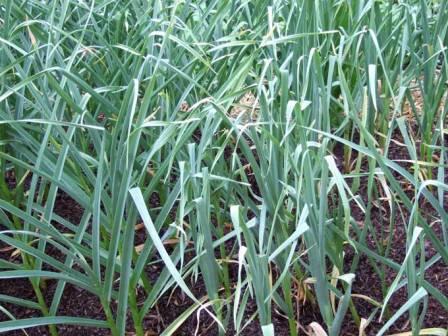
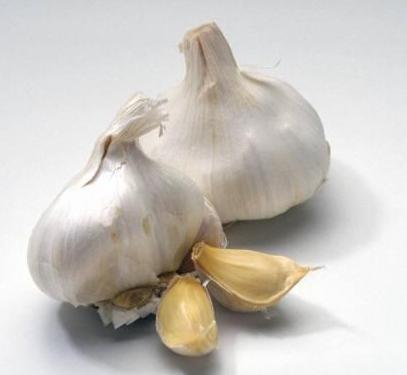
relatives are not to be found. When growing garlic, there are two types of Garlic - Hardneck and Softneck. The hardnecks do well in cooler climates, but do not store as long as softneck types.
|
|||
Planting |
|||
| In garden spacing (inches): | 4 | ||
| In flat spacing (inches): | - | ||
| Planting depth (inches): | 2 | ||
| Maximum number of plants per square foot: | 13.4 | ||
| Nutrient relationship: | Light Feeder | ||
Harvest |
|
||
| Days to maturity: | 70-77 | ||
| Harvesting period (days): | 91 | ||
| Minimum yields in pounds /square foot: | .6 | ||
Cultural |
|
| Diseases: | Bacterial Soft Rots, Basal Rot, Black Mold, Blue Mold Rot, Botrytis Leafspot, Botrytis Neck and Bulb Rot, Downy Mildew, Garlic Mosaic, Iris Yellow Spot, Onion Yellow Dwarf, Pink Root, Purple Blotch and Stemphylium Leaf Blight, Rust, Sour Skin, White Rot. |
| Insect pests:(Insect Pest Finder) | Onion Maggot, Pea Leafminer, Thrips, Wheat Curl Mite |
Varieties |
|
| Purple Stripe (hardneck), Artichoke (softneck), Silverskin (softneck), Creole (DNA studies show them in a separate class by themselves-great for mild climates), Porcelain (hardneck), Rocambole (hardneck) | |
Organic Gardening Seed and Plant Sources:
Return to Organic Gardening Vegetables from Growing Garlic


Comments
Have your say about what you just read! Leave me a comment in the box below.