|
Fall Cankerworm
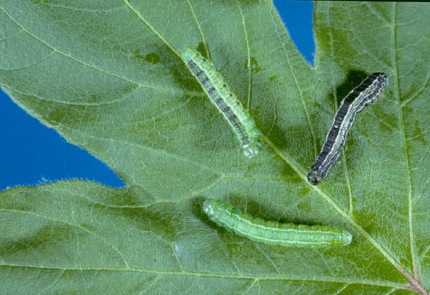
View more pictures: Bing Images Google Images Yahoo Images Common names: Fall Cankerworm Scientific name: Alsophila pometaria Region: This Caterpillar can be found in northeastern and central United States, as well as, southeastern Canada. Life cycle: This insect produces one generation each year. Overwintering occurs as an egg. Physical Description: This 3/4 inch long caterpillar is a brownish green with white stripes. The adult moth is brown or gray. The male has white bands on is wings, that span 1 inch. The female is wingless. The brown or gray eggs are shaped like little pots and are laid in compact masses on the trunk or branches by the female after climbing to the top of the tree. Feeding characteristics: This pest attacks apple and cherry trees by chewing holes in the leaves and spinning silk threads. Controls: This caterpillar has many natural predators, such as, the Tachinid Flies, Ground Beetles, Potter Wasp, Spined Soldier Beetle, and other insects that suck the juices from the cankerworm. There are at least 40 different birds that enjoy this caterpillar. Even an early frost can finish them off, helping to control them. You can also band the tree trunk with a sticky material like Tanglefoot to capture the adult female as she climbs the tree to lay her eggs. Alternatively, for larger infestations, you can spray with Bacillus thuringiensis. Return from Fall Cankerworm Insects E-H Encyclopedia of Garden Insects |