|
Blue Sharpshooter
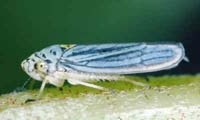
View more pictures: Bing Images Google Images Yahoo Images Common names: Blue Sharpshooter, Blue-green Sharpshooter, Sharpshooter Scientific name: Graphocephala atropunctata Region: This leafhopper can be found in the western United States. Life cycle: This insect produces one to two generations each year and the adults hibernate in garden rubbish. Physical Description: This 1/3 inch long, leafhopper is bright green, or aqua, with blue stripes on its fore wings. The eggs are laid in the grass and hatch nymphs that resemble the adult. Both nymphs and adults have the peculiar habit of scurrying sideways. Feeding characteristics: This pest, adult and nymph, attack grape foliage and transmit Pierce's disease. Controls: Try spraying the foliage with a forceful stream of water to remove the leafhoppers. If this is not effective, pyrethrum can be used, but Safer Agro-Chem's insecticidal soap spray is less disruptive to grapevine ecology. A century old method of a tar-covered sheet held on a frame can be used to collect the insects while your helper shakes the vines to set the pests airborne. A clear blue insect electrocuting light can be used to lure significant numbers of insects to their death. Avoid planting thin-leaved varieties such as Clinton and Delaware that are more susceptible to this pest. Return from Blue Sharpshooter to Insects A-D Encyclopedia of Garden Insects |